Overview

To support young people in removing sexual images or videos of themselves from the internet, the IWF and the NSPCC’s Childline developed the world-first Report Remove tool, empowering children to take control of their images. The service was launched in June 2021.
The IWF and Childline's Report Remove service ensures that young people are safeguarded and supported throughout the process. The IWF assesses reported content and takes action where it meets the threshold of illegality. Where appropriate, content is assigned a unique hash (digital fingerprint), which is shared with internet companies to help prevent the imagery from being uploaded or redistributed online.
Report Remove provides a child-centred approach to image removal that can be completed entirely online. Young people do not need to disclose their identity, can make a report at any time, and can access ongoing information and support from Childline throughout the process.
Young people create or sign into a Childline account, enabling them to receive email updates about their report. This account can also be used to access ongoing support, including contact with a Childline counsellor via online chat or freephone number, as well as relevant information and advice, self-help tools, and peer support through the Childline website.
The IWF has worked closely with the National Crime Agency and law enforcement agencies across the United Kingdom to promote Report Remove and to make it easier for officers to refer children and young people to the service. Together with the NSPCC, we have also developed signposting resources for use in schools. These awareness-raising activities are likely to have contributed to the increase in reports received in 2025. We will keep working with the NSPCC to raise awareness of the service and ensure young people know where to find support.

Some readers may find the following descriptions distressing, please feel free to skip this section.
When a child uses Report Remove, they need assistance right now - in real time – so we act promptly on each new Report Remove case that comes in. We feel privileged to help children who are experiencing a live, current threat. Through our hashing and content removal we can potentially help mitigate the harm they might be facing.
The imagery children report almost always depicts sexual posing, or a close-up image of the child’s genitals or breasts. Sometimes, the child is depicted performing a sexual act on themselves, or on another person. Each year we see that boys use the Report Remove tool most often. For analysts, this is a strong contrast to the number of girls that we see exploited via our work with public and proactive reports of URLs.
Via their reports, both boys and girls tell us their nude or sexual images and videos are already circulating on messaging apps. For others, they may want to prevent the future upload of their imagery. It is clear to us that some children are using Report Remove because they are concerned about a threat to ‘leak’ their imagery or make it ‘go viral’.
NSPCC’s Childline counsellors offer support to any young person who uses the tool. Through Report Remove submissions we witness how aggressively children are financially sexually extorted. Offenders coerce and panic children with demands for money, and threats to expose a child's nude imagery. It gives us peace of mind to know that child reporters have the option to speak to experienced and well-informed counsellors, while we tackle the practical tasks of hashing their imagery, and requesting removal of any online content.
This year, 21% of all reports to Report Remove involved faked imagery. The growing availability of AI tools means that bad actors can create fake explicit imagery that becomes increasingly difficult to detect.
It is through Report Remove that we have seen in most detail how aggressively children, particularly boys, are sexually extorted. In 2025, there has been no sign of this threat declining.
Since the launch of Report Remove in June 2021, over 4,000 young people in the UK have used the service. It feels like a step not only towards reducing the repeated victimisation of children online, but towards young people feeling more empowered in the online world.
Reports
Reports by sex and age group – Report Remove
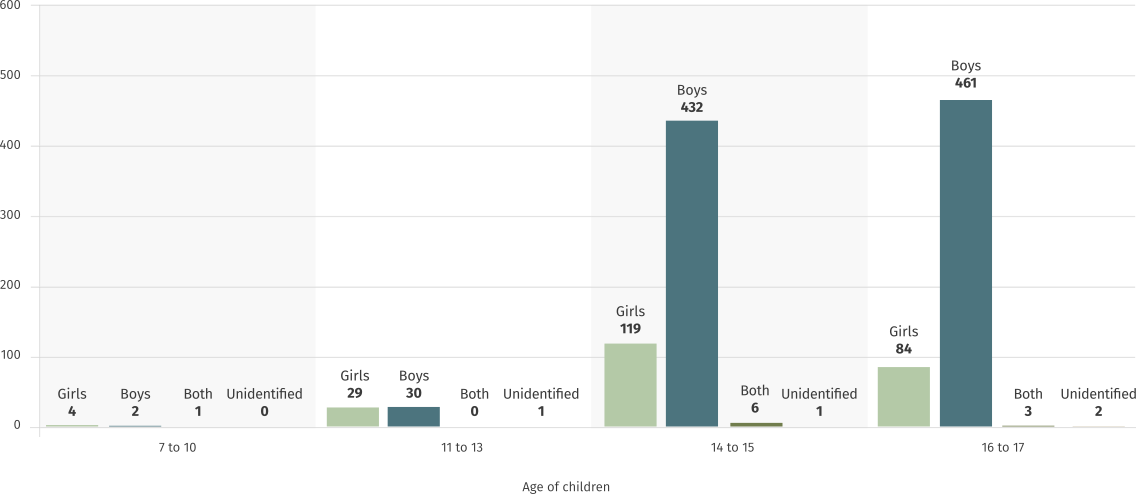
This chart shows how boys in both the 14-15 and 16-17 age groups represent the biggest users of the Report Remove service.
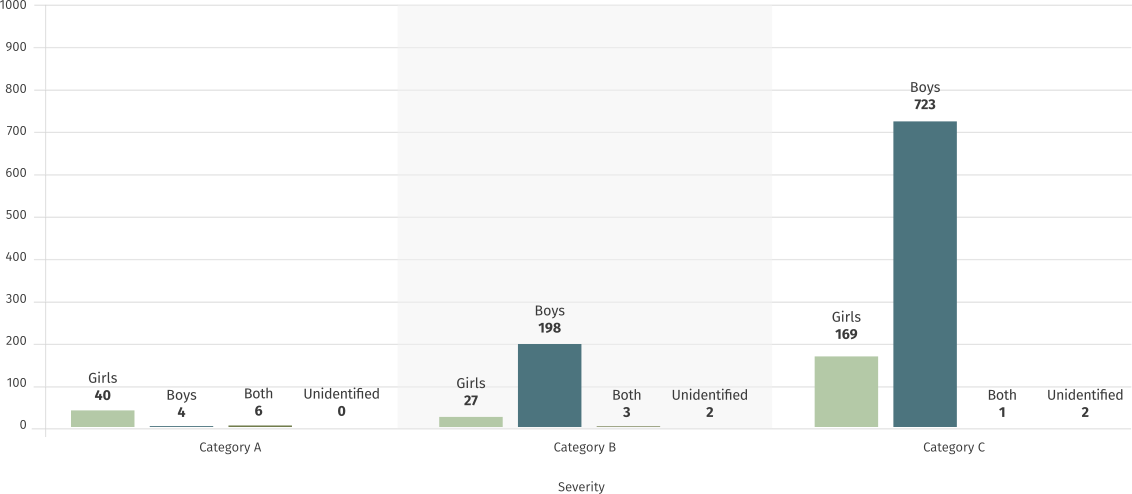
Reports by sex and severity – Report Remove
Images
Images actioned
2,963
Reports may contain one or more images or videos. For this reason, we have provided an analysis of the individual images reported to us below. This data is drawn from our IntelliGrade system, which generates hashes of illegal imagery that are shared with industry Members to prevent their recirculation online.
In 2025, as a result of actioning 1,175 reports, we assessed 2,963 individual images and 509 videos as illegal.
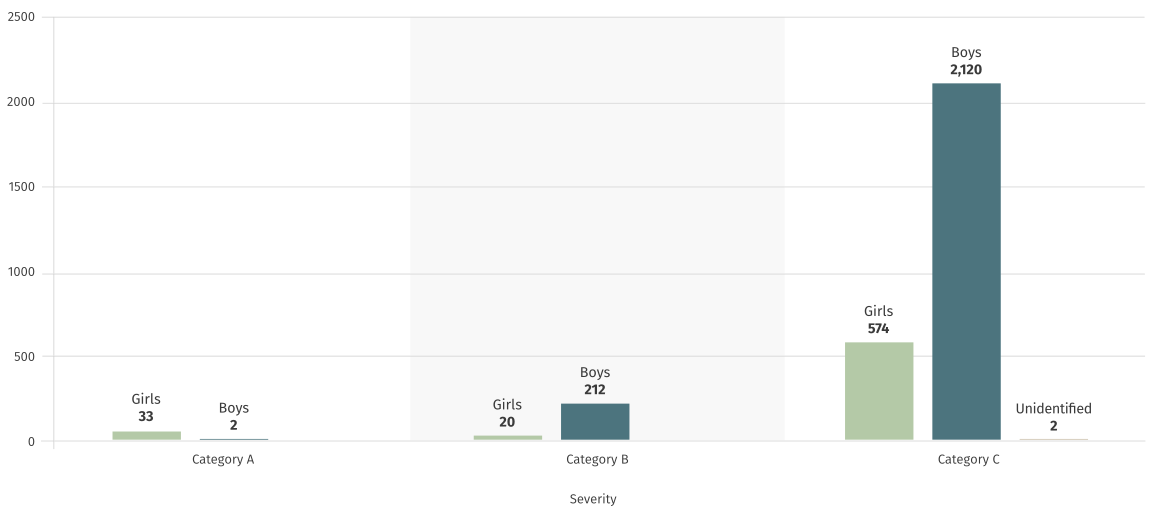
Age, sex, and severity are recorded for all single images. However, due to the complexity of assessing videos and still imagery containing multiple images, only severity is recorded in these cases. This approach improves efficiency and helps protect the wellbeing of our image assessors, without compromising the accuracy of our assessments.
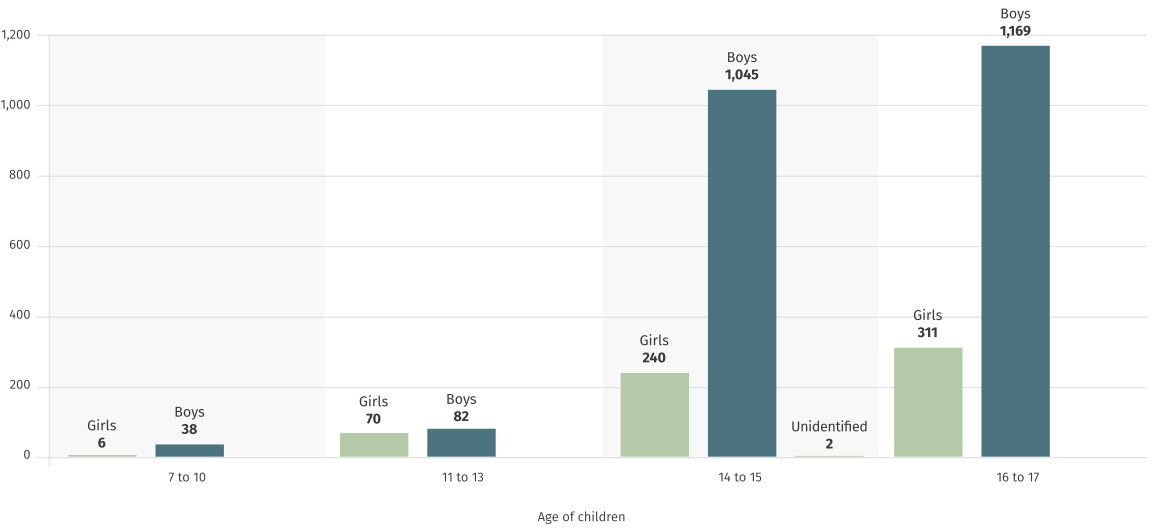
Similar to last year, more boys reported actionable images to us than girls.
Images by sex and age group – Report Remove
Videos
Videos actioned
509
We assessed 509 videos that were criminal, an increase of 27% on last year where we assessed 401 videos.
Assessing videos presents additional complexity, as they may vary in length and depict multiple children and different categories of sexual activity. In these cases, we record severity only. This approach improves efficiency and helps protect the wellbeing of our Taskforce assessors without compromising accuracy.